Thursday, October 25, 2012

Not All Christians Oppose Abortion
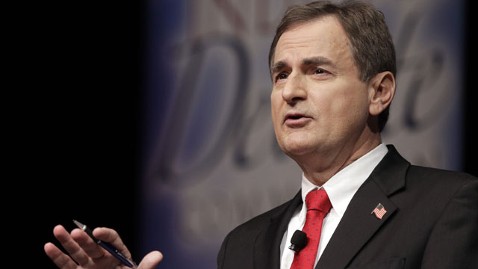
Richard Mourdock
Courtesy of ABC and AP
     Indiana Republican Senate candidate Richard Mourdock said in a debate this week that he believes pregnancies resulting from rape are part of God's plan, which is why he only supports abortion if a mother's life is in danger. Mourdock's comment has received tremendous backlash from the public, but what's sad is that he's not the only one who makes his personal religious beliefs part of his campaign. The issue of limiting abortion has become a large part of the traditional Republican platform today.
     The problem with Republicans trying to limit abortion is that they're pushing their personal beliefs on everyone else to the extent that it's become all some people know about Christianity. They're sending the message that their interpretation of the Bible and Christianity is what is correct. Because of these candidates, it seems that all Christians today are given the label of "abortion haters." I know plenty of Christians who support abortion. Some of those people are my family members, who often find that others have misconceptions about their belief systems because of the political uproar. When candidates and lawmakers try to push their religious beliefs into law, more social divisions are created, which contributes to inequality in our society. In a country where freedom of religion is supposed to be a fundamental right, these lawmakers are making it harder for people to understand exactly what Christianity is--a diverse religion with many different interpretations and denominations. Stereotyping anyone isn't right, and it's shameful that our own candidates and lawmakers are contributing to the stereotyping of Christians.

Thursday, October 18, 2012

Affirmative Action: Stereotype Training

Abigail Fisher
 courtesy of MSNBC and the Associated Press
     The issue of affirmative action is being brought before the Supreme Court again. The Supreme Court will decide whether or not affirmative action is just during its session this year, thanks to Fisher v. University of Texas at Austin. Abigail Fisher, a 22-year-old woman, was denied admission to the University of Texas in 2008. Fisher said she was denied admission because she is white and hopes "that they’ll completely take race out of the issue in terms of admissions." 
     Affirmative action has been a highly debated topic for many years. The whole purpose of the policy was to ban discrimination of people because of their race or gender. In 1978, the Supreme Court decided that affirmative action was legal, as long as quotas weren't used. The thing is, the very policy of affirmative action hinders our ability to move past race and gender discrimination in America. As we should all know, not all people of the same racial background or gender think and act in the exact same way. I am a white female, just like my roommate, but she and I have entirely different interests and opinions. We do not act alike, and we don't approach projects or work in the same way either. If we were stereotyped based on our race and gender, people would end up with a flawed conception of our actual personalities. When universities are required to consider race and gender during the admissions process, that sends the message that stereotyping people is okay. If America is supposed to be a land where all people are created equally, then stereotyping shouldn't be allowed, much less encouraged.

Thursday, October 4, 2012

Television shows: causes of misconceptions


     TLC's new show, "Breaking Amish," premiered in September. The reality show depicts Amish people venturing into New York to explore modern life for the first time. Advertisements promise to "pull back the curtains" on the Amish lifestyle, providing insight into how Amish people live and how they adjust to the modern world. The only problem with this is that the show has been accused of falsely representing its characters. Old photos of characters in modern clothes have surfaced, and claims that some have been married, divorced and have children have come up as well. TLC and Hot Snakes, the show's production company, issued a joint response to these accusations, saying that "There is a lot of information floating around about the group featured on 'Breaking Amish.' Much of it is not true, but some of it is -- and is addressed in upcoming episodes."
     Here's where we get into a sticky issue, however. How can TLC claim to accurately represent an Amish person's life and adventure into the modern world when its subjects have already been exposed to modern life? In a society where we already have tons of misconceptions about people because of their religion, I don't believe it's right for TLC to show this television series. The network is giving viewers an invalid reference point when it comes to this show. These characters obviously are not first-time venturers into the modern world, so they're not truly unexposed Amish people. America isn't given a truthful image of an unexposed group of Amish people to base their opinions on. When people see these shows, they gain conceptions of what life is like for unfamiliar cultures. This means that people will watch this show, take the information they learn, and apply it to all Amish people, which isn't right. I'm from a small Texas town and live on a farm, which most people take to mean that I live with (or am) a complete southern hillbilly. People watch shows like "My Big Redneck Vacation" and think they know how people in my town act. I've had classmates travel to New York that have been asked if we ride horses to school, which is a horrible misconception. Television shows that don't present truthful images of people in certain societies or of certain religious or racial backgrounds contribute to the trouble we have with inequality in America.